
 It’s 7:42 a.m. One child can’t find a shoe. The other has decided, five minutes after asking for it, that they hate their breakfast. Your coffee’s gone cold, you’re already late, and somehow you’re the one yelling.
Later, you promise yourself tomorrow will be different.
Sound familiar?
Now picture asking a different question. Not “How do I stop this from happening?” but “What is this pattern showing me, and what could I try next time?”
Those simple shifts sit at the heart of Reorganizational Healing (ROH), a framework presented by chiropractor Donny Epstein, D.C. His work asks us to look past simply getting back to how things have always been. In this view, challenges can become chances to grow and respond to life in new ways with more awareness.
For parents, that’s an interesting idea, especially if you’d like to build new generational patterns instead of passing the old ones down to your kids.
Three Ways to Look at Change
Dr. Epstein’s ROH framework has three parts: The Four Seasons of Wellbeing, The Triad of Change and The Five Energetic Intelligences. (Don’t worry, you don’t need to memorize their names to see how they might show up in everyday life!)
1. The Four Seasons of Wellbeing: Where Am I Right Now?
The Four Seasons of Wellbeing are Discover, Transform, Awaken, and Integrate. Here’s how they might look applied to that chaotic morning.
Discover is noticing the pattern, rather than treating each morning as its own separate disaster. Everyone’s rushing. Nobody’s ready. Your stress is up before breakfast is even on the table. Every. Single. Day.
Transform is trying something new. Maybe clothes and backpacks get set out the night before. Or the family builds in a few extra minutes to actually connect before everyone heads off for the day.
Awaken is the moment you realize something else is possible: mornings don’t have to start in crisis mode.
Integrate is when the new routine simply becomes part of family life.
Of course, real life rarely moves through four tidy steps. You may circle back to the same challenge many times, returning to Discover as you consider what to try next. That’s okay. The point is to notice, learn, and keep growing.
2. The Triad of Change: Look at the Whole Picture
This part of the framework looks at three connected areas: structure, behavior, and perception.
Picture a parent at the end of a long week. Tight shoulders. Less patience than usual. Every request from the kids feels like one more thing to manage.
There’s something physical going on, a pattern of behavior, and a particular way of reading the situation. Each one can influence the others.
Focus on just one and you might miss the bigger picture. Getting more rest could be a useful starting point. So could changing a routine or rethinking an automatic reaction.
So get curious about the whole pattern, instead of blaming yourself for having a hard day.
3. The Five Energetic Intelligences: What Else Shapes My Experience?
Here ROH reaches beyond the physical to include emotion, thought, personal meaning, and a sense of connection with something larger than ourselves.
Think about a child who’s nervous about starting at a new school. There’s the physical feeling of those nerves. Then there are the emotions, the thoughts running through their head, and whatever this change means to them.
It’s natural for a parent to focus on just getting through day one. A wider view leaves room for more: listening, reassurance, confidence, and a sense of belonging as the child keeps settling into these new experiences over the following days, weeks, and months.
Where Does Chiropractic Fit?
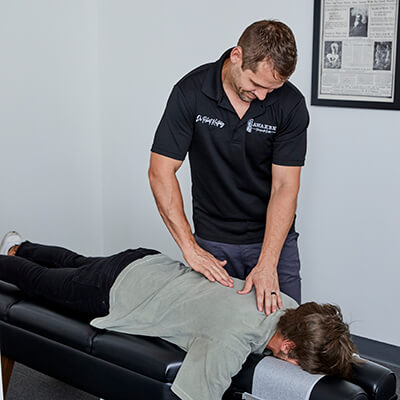
Dr. Epstein also developed NetworkSpinal®, a chiropractic approach that uses gentle, specific contacts along the spine. At Awaken Chiropractic Center, NetworkSpinal is one of the techniques we offer as part of our nervous-system-focused approach to care.
So why does that connection matter?
The nervous system helps coordinate how the body functions and how it responds to changing demands. At Awaken, we’re interested in more than symptoms. We consider spinal and nervous system findings in relation to function and health. And we see each client as a whole person, with their own experiences, needs, and goals.
NetworkSpinal places an emphasis on body awareness and mathematically unique spinal wave responses. This connects with the broader ROH themes of awareness, coherence, and adaptability, which offer one perspective on the philosophy behind the approach.
At our Port St Lucie office, Dr. Victoria Kustarz, D.C., and Dr. Robert Kustarz, D.C., take time to understand each client’s story. From there, our doctors perform an individualized chiropractic evaluation and use age-appropriate nervous system assessment technology to help inform care recommendations. NetworkSpinal is one technique among the chiropractic approaches we use.
What If Your Next Step Starts With Asking a Different Question?
Sometimes the breakthrough you’re after isn’t a new answer. It’s a new question, one that opens up a whole different way of seeing things.
You don’t have to be perfect. You don’t have to eliminate every stressful situation or get your family back to some imaginary version of normal.
Sometimes meaningful changes begin with noticing a pattern, understanding it a little better, and trying a different response.
What if wellness isn’t only about getting back to normal, but about becoming more adaptable as life changes?
Curious about nervous system function and a personalized approach to family wellness? We’d love for you to explore chiropractic care at Awaken Chiropractic Center in Port St Lucie.
Original research: Epstein DM, Senzon SA, Lemberger D. “Reorganizational Healing: A Paradigm for the Advancement of Wellness, Behavior Change, Holistic Practice, and Healing.” The Journal of Alternative and Complementary Medicine. 2009;15(5):475-487. Read the original paper.